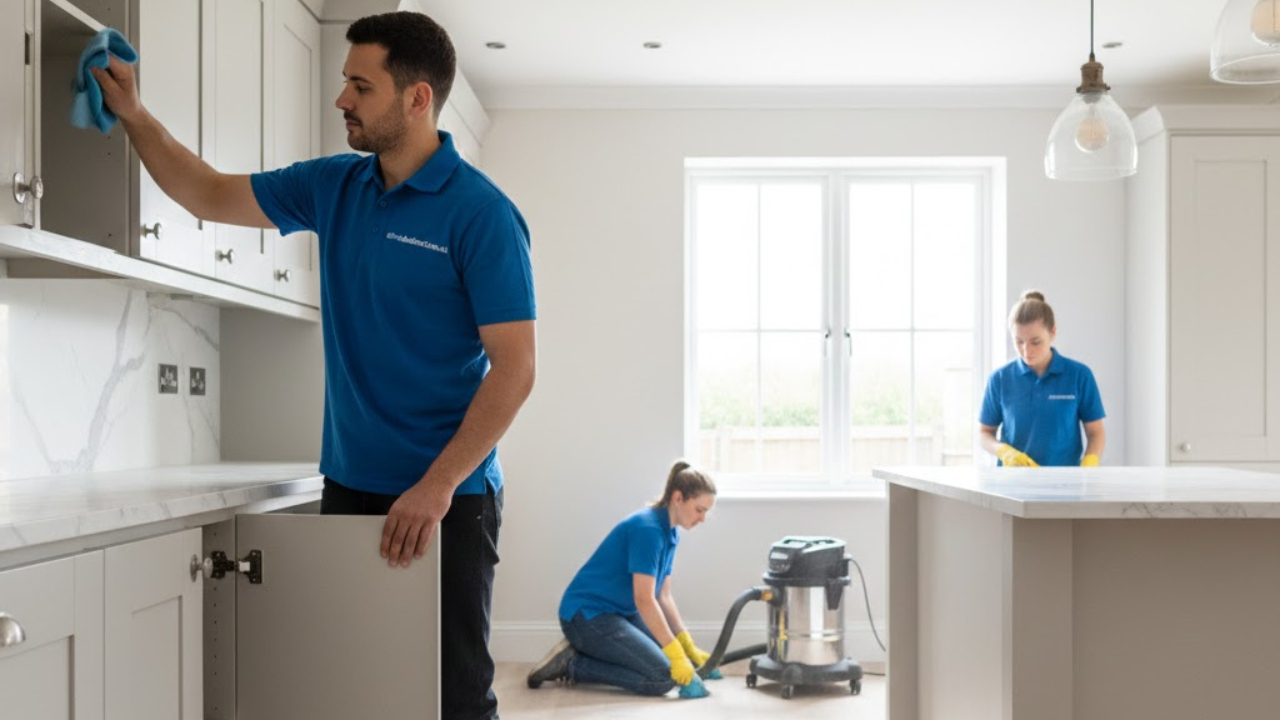
The builders have finally packed up, the dust sheets are off, and at first glance your new kitchen or extension looks great. Then you run a finger along a sill and it comes away white, or you spot paint specks across your new floor. This is the point many people realise the builders’ idea of “clean” is not the same as a proper after builders finish.
This after builders cleaning checklist walks through the 15 most‑missed areas, how a professional team handles them day‑to‑day, and what you can do yourself to get your property genuinely move‑in ready.
What “After Builders Cleaning Checklist” Actually Means
When cleaners talk about an after builders cleaning checklist, they mean a structured set of tasks that go far beyond a normal weekly tidy or even a standard deep clean. It is designed around building dust, paint, plaster and silicone, not just everyday grease and fingerprints.
Good after builders cleaning UK services use a checklist to make sure nothing is missed, especially in tricky UK properties like narrow terraces, loft conversions and London flats with awkward access.
Common Problems After Building or Renovation Work
Even with tidy trades, post renovation work leaves behind issues you only spot once you start living in the space. Common problems include:
- Fine plaster dust on skirting boards, sockets, radiators and window sills
- Paint flecks on glass, tiles, switches and new flooring
- Grout haze on bathroom and kitchen tiles
- Silicone smears around basins, worktops and shower trays
- Stickers and glue residue on new windows, appliances and sanitary ware
In real life that means you sit on the sofa and see dust on the TV stand, your socks pick up grit from the floor, and the new bathroom glass never quite looks clear.
What Is Included in a Professional After Builders Clean
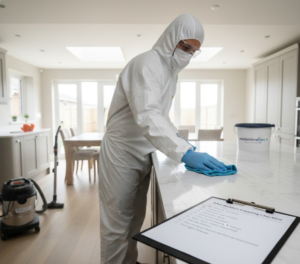
A proper builders clean is more structured than “we’ll just do a tidy up”. For most houses and flats, a professional checklist will cover:
- High‑level dusting of ceilings, coving, light fittings, beams and extractor fans
- Detailed dusting and wiping of walls, doors, frames, skirting, sockets, switches and radiators
- Post construction cleaning of internal windows, frames and sills, including sticker and residue removal
- Kitchen cleaning: cupboards in and out, worktops, sinks, tiles, kickboards, visible appliance surfaces
- Bathroom cleaning: tiles, grout, taps, shower screen, bath, toilet, basin and any shelves or niches
- Floor care: vacuuming with good filtration, then mopping or machine cleaning hard floors
- Spot removal: careful scraping and chemical treatment for paint, plaster and silicone marks
Some companies also include a final sparkle clean stage, focusing on glass, mirrors and stainless steel so the property looks ready for photos or handover.
Step‑by‑Step Process (How It’s Done in Practice)
On a typical 3‑bed semi or London flat, an experienced team will roughly follow this flow.
1. Survey and plan
- Quick walk‑through with you or the contractor.
- Check which rooms are finished, which are still “live”.
- Note delicate finishes like real wood, stone, polished plaster.
2. High to low dust removal
- Start in the highest room, usually the loft or top floor.
- Dust ceilings, coving, light fittings, extractor fans and pipework.
- Work down walls, window reveals, frames and sills.
3. Detail clean of fixtures and fittings
- Wipe skirting boards, doors, frames, handles, sockets and switches.
- Remove paint spots and plaster carefully from glass and hard surfaces.
- Clean internal windows, including frame tracks and trickle vents where accessible.
4. Kitchens and bathrooms
- Empty and wipe kitchen cupboards and drawers if agreed.
- Degrease and sanitise worktops, sinks, taps and tiles.
- In bathrooms, remove grout haze, polish glass and chrome, and disinfect sanitary ware.
5. Floors and final sparkle clean
- Vacuum carpets slowly to pull out fine dust; recommend a separate carpet clean if heavily contaminated.
- Mop or machine clean hard floors, checking for leftover plaster lumps that could scratch.
- Finish with a sparkle clean of glass, mirrors, stainless steel and high‑touch areas so everything looks sharp.
Time‑wise, a small one‑bed flat might need around half a day with two cleaners. A full‑on refurb of a 4‑bed house can easily need a full day or more, often done in two visits to let dust settle between stages.
Deep Clean vs After Builders Clean
People often search for both services and assume they are identical. The dirt tells a different story.
| Aspect | Deep Clean | After Builders Clean |
|---|---|---|
| Main focus | Built‑up everyday grime, grease, limescale | Construction dust, paint, plaster, silicone, stickers |
| Typical timing | End of tenancy, spring clean, before sale or guests | Straight after building, renovation or fit‑out |
| Key tasks | Oven, fridge, limescale removal, behind furniture | Dust extraction, sticker removal, paint and plaster spot removal |
| Equipment | Domestic/contract vacuums, standard chemicals | High‑filtration vacuums, specific builders’ residues removers |
| Risk to finishes | Moderate – mostly existing surfaces | Higher – lots of new delicate finishes, more chance of damage if rushed |
| Pricing level (like for like) | Lower to mid | Mid to higher due to time and specialist work |
If you are weighing up deep clean vs after builders clean, look at what has actually happened in the property. Fresh plaster, sawdust and silicone lines call for a builders clean, not just a strong mop and a bit of elbow grease.
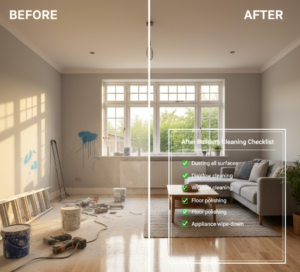
15 Areas Contractors Commonly Miss (Your Practical Checklist)
This is where a focused after builders cleaning checklist really earns its keep. These are the spots that nearly always get overlooked:
- Tops of kitchen units and tall furniture
- Inside window frames and runners, especially patio and bi‑fold doors
- Skirting board tops along every corridor and behind radiators
- Light switches, plug sockets and thermostat fronts dotted with dust and finger marks
- Extractor fans and vents in bathrooms and kitchens clogged with fine dust
- Shower screens and tile edges, with grout haze and silicone smears
- Behind toilets and sinks, where dust and debris collect on new pipework
- Inside new cupboards and drawers, often still full of sawdust and packaging bits
- Door frames and tops of doors, which collect a thick line of dust
- Stair spindles and bannisters, especially in older terraced houses
- Radiator fins, which trap plaster dust and blow it back into the room
- Window sills and bay reveals, commonly used as temporary worktops by trades
- Under free‑standing appliances, once the protective film is removed
- Edges of hard floors, where grout, paint droplets and plaster crumbs stick
- Ceiling corners and spotlights, which can be ringed with fine dust
Using this list room by room – especially in UK homes with lots of little alcoves – helps you check whether the builders clean has actually been thorough.
Pricing Factors in the UK
Although this article is not a detailed post builder cleaning cost guide, it helps to know what drives after builders cleaning prices.
Key factors include:
- Size and layout of the property (studio flat vs 4‑bed detached).
- Level of works (new kitchen only vs full refurb and re‑plaster).
- Access and parking, particularly for after builders cleaning London jobs.
- How tidy the builders left things and whether rubbish has been removed.
- Whether you need one visit or two stages: initial builders clean plus final sparkle clean.
Most professional services will either quote an hourly rate with a minimum booking or a fixed price once they understand the scope. Expect heavier, dustier jobs with lots of glass or high‑end finishes to sit at the top end of typical ranges.
How Homeowners and Landlords Can Prepare the Property
Good prep can make a real difference to the result and cost. Simple steps include:
- Confirming with the contractor that all major dusty work is finished and snagging is minimal.
- Asking trades to remove large rubbish, offcuts and empty tubs, not just leave them in the corner.
- Ensuring there is hot water, working electrics and decent lighting in all rooms.
- Opening windows for ventilation where safe, especially after painting.
- Moving small personal items and soft furnishings out of dusty zones if possible.
Landlords getting a rental ready after post renovation cleaning can also line up inventory photos for the same day as the sparkle clean, so the property is recorded in its best condition.
Mistakes People Make After Builders Work
There are a few classic traps that cost time and money:
- Booking cleaners too early, while builders are still drilling, sanding or cutting outside the door.
- Trying to do the first heavy pass with a basic domestic vacuum that simply clogs and blows dust around.
- Using harsh scourers or blades on brand‑new glass, tiles or worktops and scratching them.
- Forgetting less obvious spaces such as under‑stairs cupboards, loft access areas and plant rooms.
- Assuming “builders clean included” in a contract means a full post construction cleaning service, when it often just means a basic sweep and bagging of rubbish.
Being clear up‑front about what you expect – ideally with your own after builders cleaning checklist – avoids a lot of back‑and‑forth later.
When You Should Call Professional Cleaners
There is nothing wrong with doing some of the work yourself, but there are times when bringing in a specialist team is simply sensible.
It is usually worth calling professionals when:
- You have had major works like an extension, loft conversion or full‑house refurb.
- You need the place turned round quickly for move‑in, sale or tenants.
- There are a lot of high‑value finishes: natural stone, real wood, bespoke joinery, crittall‑style glass.
- You have allergies or young children and want dust and debris properly controlled.
For lighter jobs – a single bathroom or a small kitchen refurb – you might handle the bulk yourself and just pay for a shorter builders clean targeting the trickier areas and final sparkle clean.
FAQ: After Builders Cleaning Checklist & Services
1. What is after builders cleaning?
After builders cleaning is a one‑off, detailed clean carried out after construction or renovation works. It focuses on removing dust, plaster, paint spots and other builders’ residues so the property is ready to live in or hand over.
2. Is an after builders cleaning checklist really necessary?
Yes, especially on bigger projects. A checklist makes sure small but important areas like tops of doors, inside window frames and behind toilets are not forgotten in the rush to finish.
3. How is after builders cleaning different from normal cleaning?
Normal cleaning tackles everyday dirt like crumbs, fingerprints and light limescale. After builders cleaning targets heavier debris and fine dust from sanding, plastering and cutting, and it usually needs stronger equipment and more time.
4. Do I need a builders clean if my contractor says they will tidy up?
Most contractors will sweep, bag rubbish and remove obvious mess, but they rarely have time to do a proper post construction cleaning. If you want the property genuinely dust‑free and “photo ready”, a dedicated builders clean is the safer bet.
5. How long does a typical after builders clean take?
Roughly speaking, a small one‑bed flat might take around half a day with a small team, while a larger 3–4 bed house after heavy works can take a full day or more, sometimes over two visits to deal with settling dust.
6. Can I stay in the property during an after builders clean?
You usually can, but it is not always comfortable. There may still be some airborne dust and stronger cleaning products in use, so it is wise to keep pets and children away from the busiest areas until the job is finished.
7. Does an after builders clean include carpet cleaning?
Not usually as standard. Most teams will vacuum carpets thoroughly but will quote separately for professional carpet cleaning, especially if there has been heavy traffic, paint spills or plaster dust pushed deep into the pile.
8. How often should I book an after builders clean?
It is typically a one‑off service linked to a specific project. Some people choose a two‑stage approach: an initial builders clean to remove the worst, then a final sparkle clean just before moving furniture back in or handing keys to tenants.
9. Can a deep clean replace an after builders clean?
A deep clean can help if there has been no major building work. Once you have plaster dust, sawdust and paint splashes everywhere, you really need a builders clean checklist and process to get a proper finish.
10. What should I ask a company before booking?
Ask what is included, what is classed as an extra, roughly how long they expect the job to take, what products and equipment they use, and whether they have experience with after builders cleaning London or similar busy areas if parking and access are tricky.
READ MORE : Builder Cleaning Cost UK: 2026 Price Guide
Conclusion
After builders work should feel exciting, not overwhelming. A clear after builders cleaning checklist – and a realistic view of what contractors actually miss – helps you protect your new finishes and enjoy the space sooner. If you are planning works or have just finished a project, it is worth speaking to a specialist cleaner, sharing a few photos and measurements, and asking for a straightforward quote based on your property rather than guesswork.
1 thought on “After Builders Cleaning Checklist: 15 Missed Spots”