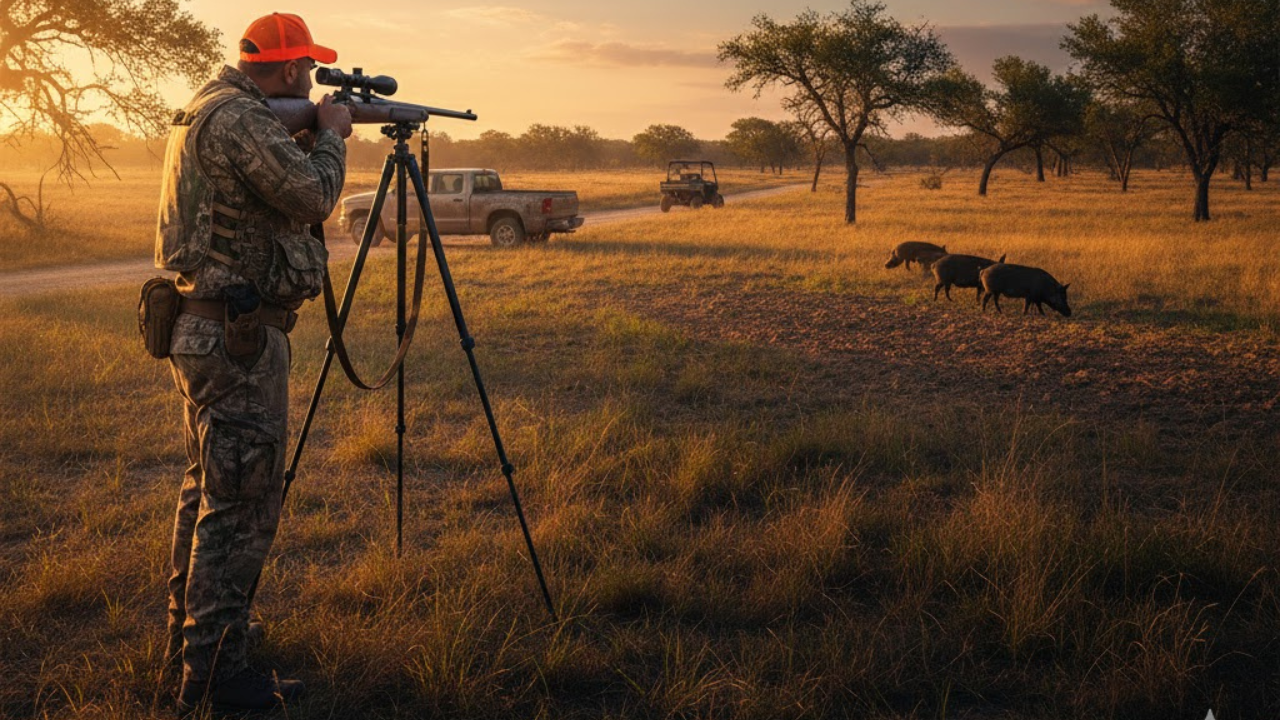
Discover the best time to hunt hogs in Texas. Winter (December-February) peaks, spring strategies, summer night hunting, fall acorn season tactics. Expert timing guide for day/night hunts with weather patterns & hog behavior analysis.
I learned about Texas hog hunting timing the hard way—sitting in a South Texas blind at 2 p.m. in July, sweating through my camo, watching absolutely nothing happen for four hours straight. My guide finally admitted what experience hunters already knew: summer midday hog hunting in Texas ranks among the least productive strategies imaginable. Hogs were bedded down in thick brush during peak heat, and we were wasting prime hunting hours fighting dehydration.
Six months later, same ranch, February morning at 10 a.m., I watched three separate sounders (groups of 6-12 hogs) move through clearings actively foraging in broad daylight. The temperature sat at 45°F, and hogs were everywhere—rooting fields, following creek beds, crossing open areas with zero concern for exposure. That contrast—empty summer afternoon versus winter hog abundance—taught me what Texas hunting guides repeat endlessly: timing determines everything in hog hunting success.
Texas allows year-round hog hunting with no closed seasons or bag limits on private land, but this unlimited access misleads newcomers into thinking all times produce equal results. They don’t. Hog behavior shifts dramatically with seasonal temperature changes, breeding cycles, food availability, and daylight patterns. Understanding these variables transforms hog hunting from frustrating guesswork into strategic planning that consistently produces opportunities.
Winter: December Through February (Peak Season)
Ask experienced Texas hog hunters to name the absolute best time for hunting feral pigs, and the overwhelming consensus points to winter months, specifically December through February. Multiple factors converge during this period to create optimal hunting conditions that no other season matches.
Why Winter Dominates
Extended Daylight Activity: Cold temperatures flip hog behavior from predominantly nocturnal to significantly diurnal. While hogs maintain some nighttime movement year-round, winter forces increased daytime foraging as they burn calories maintaining body temperature. Mid-morning through early afternoon—typically 9 a.m. to 3 p.m.—produces reliable sightings as hogs actively search for food rather than bedding in thick cover.
Increased Movement Range: Survival mode kicks in during winter. Hogs travel farther distances seeking food, covering more territory and appearing in areas they avoid during abundant summer months. This expanded range increases encounter probability whether you’re hunting from blinds, stalking, or using feeders.
Comfortable Hunter Conditions: Texas winters rarely produce extreme cold (average temps 40-60°F), making all-day sits tolerable without the heat exhaustion risk plaguing summer hunts. Hunters maintain better focus, patience, and physical comfort—factors directly impacting shooting accuracy and decision-making when opportunities arise.
Breeding Season Peak: Winter marks primary breeding season for feral hogs in Texas. Boars become more aggressive, territorial, and mobile as they seek sows, increasing daytime visibility. Sounders with mature sows attract multiple boars, creating congregation points where numerous hogs appear simultaneously.
Reduced Vegetation: Deciduous trees drop leaves, grasses die back, and overall cover decreases significantly. Spotting hogs in winter brush is substantially easier than summer’s thick vegetation that conceals movement even in relatively open terrain.
Winter Hunting Strategies
Focus midday hunts (10 a.m.-2 p.m.) when hog activity peaks and temperatures reach daily highs. Morning hunts work well, but afternoons often produce better results as hogs move to water sources and preferred feeding areas.
Target food sources aggressively. Winter’s natural food scarcity makes supplemental feeding stations (corn feeders) incredibly effective. Hogs visit feeders more predictably during winter than any other season, often appearing within 30 minutes of scheduled feed drops.
Hunt water sources during dry winters. Even cold weather requires hydration, and limited water availability concentrates hogs around reliable sources—ponds, creeks, stock tanks—particularly during warmer afternoon periods.
Spring: March Through May (Variable but Productive)
Spring represents transitional hunting where conditions shift from winter’s consistent productivity toward summer’s challenges. March through early April maintains much of winter’s advantage, while late April and May begin showing summer behavioural patterns.
Spring Advantages
Pleasant Weather: Temperatures moderate into comfortable ranges (60-75°F) allowing all-day hunting without extreme heat or cold. This weather sweet spot enables extended sits without physical discomfort forcing early departures.
Flexible Timing: Hogs remain active throughout day and night during spring. Morning, midday, afternoon, and evening hunts all produce results, giving hunters scheduling flexibility unmatched in other seasons. This versatility particularly benefits hunters with limited vacation days who can’t control precise timing.
Food Abundance: Spring vegetation growth provides diverse natural food sources. While this disperses hogs more than winter scarcity, it also means hogs maintain better body condition and predictable patterns around preferred food areas—oak groves, agricultural edges, new grass growth.
Spring Challenges
April Wind: April typically brings Texas’s strongest sustained winds, particularly in South and Central regions. Wind carries scent farther and more unpredictably, significantly increasing detection risk with hogs’ keen sense of smell. Experienced hunters avoid April entirely or restrict hunts to calm days, checking weather forecasts obsessively before committing to specific dates.
Dispersed Hogs: Unlike winter’s concentrated feeding, spring’s food abundance scatters hogs across larger territories. This reduces feeder effectiveness and makes chance encounters less frequent. Hunters compensate through scouting, identifying specific feeding areas (rooted ground, hog trails) before hunting rather than random stand placement.
Increasing Nocturnal Behavior: As temperatures climb through May, hogs begin shifting toward night activity. Late May hunts increasingly resemble early summer conditions where daytime sightings decline significantly.
Spring Hunting Strategies
Hunt early mornings (6-9 a.m.) and late evenings (5-8 p.m.) as primary windows, particularly in late spring when midday heat begins affecting hog movement. These crepuscular periods produce consistent action as hogs transition between bedding and feeding areas.
Scout aggressively. Spring’s dispersed hogs reward hunters who invest time locating active areas through trail cameras, fresh sign (rooting, tracks, wallows), and pre-dawn observation. Random stand placement yields poor results compared to intelligence-driven positioning.
Adapt to wind conditions. Check daily wind forecasts and cancel hunts during high-wind periods unless you’re hunting from enclosed blinds with scent-control advantages. April wind makes stillhunting and spot-stalking nearly impossible as scent control becomes unmanageable.
Summer: June Through August (Night Hunting Prime Time)
Summer represents Texas hog hunting’s most challenging season for traditional daylight methods but opens unique opportunities for hunters embracing night hunting technology.
Summer Realities
Extreme Daytime Heat: Temperatures routinely exceed 95-105°F during midday, forcing hogs into thick brush, creek bottoms, and shaded areas where they remain bedded until temperatures drop. Daylight hunting during peak heat (10 a.m.-7 p.m.) produces minimal results regardless of location quality.
Water Dependency: Summer drought concentrates hogs around reliable water sources—ponds, rivers, stock tanks, shaded creeks. This predictability enables targeted hunting, but daytime visits occur primarily during cooler dawn and dusk periods, not midday.
Nocturnal Dominance: Hogs shift almost entirely to nighttime activity, feeding after sunset through pre-dawn hours. Hunters unwilling to adapt to night hunting face severely limited opportunities during Texas summers.
Summer Night Hunting Advantages
Optimal Hog Activity: Night hours produce peak hog movement during summer. What appears as empty landscape during day transforms into active hog highways after dark, with sounders traveling freely without heat stress.
Technology Edge: Thermal scopes and night vision equipment provide overwhelming advantages. Hogs can’t detect thermal signatures, allowing hunters to spot animals from distances impossible with natural vision. Quality thermal scopes ($2,000-5,000) identify hogs through brush, across fields, and in complete darkness.
Reduced Competition: Fewer hunters pursue night hunting due to equipment costs, discomfort with darkness, or lack of property access allowing night operations. This reduced pressure means less educated hogs and more natural behavior.
Summer Hunting Strategies
Invest in quality thermal or night vision equipment. Budget options ($500-1,000) work for entry-level night hunting, but serious summer hog hunters benefit from premium thermal scopes that identify hogs at 400+ yards in total darkness.
Focus dawn and dusk transitions. The hour before sunrise and after sunset represents peak summer hog movement when temperatures moderate but enough light remains for traditional hunting methods. This golden hour produces reliable action for hunters without night equipment.
Hunt water sources aggressively. Position near stock tanks, pond edges, and creek crossings where hogs visit during cooler night hours. Trail cameras confirm timing patterns—most summer water visits occur 9 p.m. to 4 a.m., with peaks around midnight.
Fall: September Through November (Acorn Season Advantage)
Fall brings transitional conditions where summer’s heat gradually yields to comfortable temperatures while natural food abundance creates unique hunting dynamics.
Fall Characteristics
Mast Crop Explosion: Oak trees drop acorns throughout Texas fall, creating concentrated food sources that draw hogs from wide areas. Mature oak groves become hog magnets, with multiple sounders converging on preferred trees producing desirable acorn varieties.
Temperature Moderation: September remains hot (similar to summer), but October and November bring comfortable temperatures restoring daytime hog activity. Late fall increasingly resembles early winter conditions as temperatures drop into 50-60°F ranges.
Pre-Winter Movement Increase: Hogs sense approaching winter and increase feeding intensity, building fat reserves for colder months. This biological drive creates noticeable activity increases through November, setting up winter’s peak productivity.
Fall Hunting Strategies
Scout oak groves obsessively. Not all oaks produce equally—mature trees, specific species (live oak, red oak), and individual tree productivity varies dramatically. Find trees with heavy acorn drops and fresh hog sign (rooting, tracks, droppings), then focus hunting efforts there.
Hunt mornings initially, evenings as temperatures drop. Early fall maintains summer’s heat, making evening hunts most productive. Late fall shifts toward morning preference as overnight temperatures cool and hogs feed into daylight hours.
Reduce feeder dependence. Natural acorn abundance makes artificial feeding less attractive to hogs. While feeders still work, they compete with preferred natural foods. Hunting natural food sources directly often outproduces feeders during peak mast years.
Time of Day Considerations Year-Round
Beyond seasonal timing, daily timing patterns significantly impact success rates across all seasons.
Early Morning (6-9 a.m.): Productive year-round as hogs return from night feeding to bedding areas. Summer’s best daylight window. Winter produces moderate action. Spring and fall offer consistent but not peak activity.
Midday (10 a.m.-2 p.m.): Winter’s golden hours when cold temperatures drive peak foraging. Avoid completely during summer unless hunting shaded water sources. Spring and fall offer moderate midday potential.
Late Afternoon/Evening (4-8 p.m.): Universal productivity across all seasons as hogs leave bedding areas heading toward feeding zones. Summer’s second-best daylight option. Winter, spring, and fall all produce reliable evening action.
Night (9 p.m.-5 a.m.): Summer’s peak activity window. Other seasons maintain significant night movement but offer sufficient daylight alternatives that night hunting becomes optional rather than necessary.
Weather’s Impact on Hog Hunting Timing
Temperature alone doesn’t determine success—weather patterns create micro-timing opportunities within broader seasonal frameworks.
Cold Fronts: Hog activity spikes 24-48 hours before cold front arrivals as barometric pressure drops. This phenomenon works year-round but produces most dramatic results during fall and winter when fronts bring significant temperature changes.
Light Rain: Moderate rainfall (not heavy storms) increases hog movement as rain cools air, softens ground (making rooting easier), and reduces predator threats. Hunting during or immediately after light rain often outproduces perfect weather conditions.
Moon Phase: Full moons increase nighttime feeding, potentially reducing daytime movement. New moons concentrate feeding into remaining darkness hours, sometimes pushing activity into dawn and dusk periods. This effect varies regionally and seasonally—more pronounced in areas with significant hunting pressure.
The Verdict: December-February Wins, But Every Season Offers Opportunities
After hunting hogs across Texas for six years through every season and time combination imaginable, winter’s December-February window definitively produces the most consistent, highest-volume results. If you’re planning a single Texas hog hunt and want maximum probability of success, book late January or February when all variables align optimally.
However, dismissing other seasons ignores real opportunities. Spring offers comfortable conditions with good success rates. Summer night hunting provides unique experiences unavailable any other time. Fall’s acorn hunting creates memorable scenarios watching multiple sounders converge on food sources.
The “best” time ultimately depends on your specific priorities. Want highest success probability? Winter. Want comfortable weather? Spring or fall. Want cutting-edge thermal hunting experience? Summer nights. Want natural food source hunting? Fall acorns.
Texas’s year-round access means you can hunt when it works for your schedule, adapting strategies to seasonal realities rather than waiting for a single perfect window. That flexibility—combined with understanding when and why hogs behave differently—transforms unlimited access into unlimited opportunity.