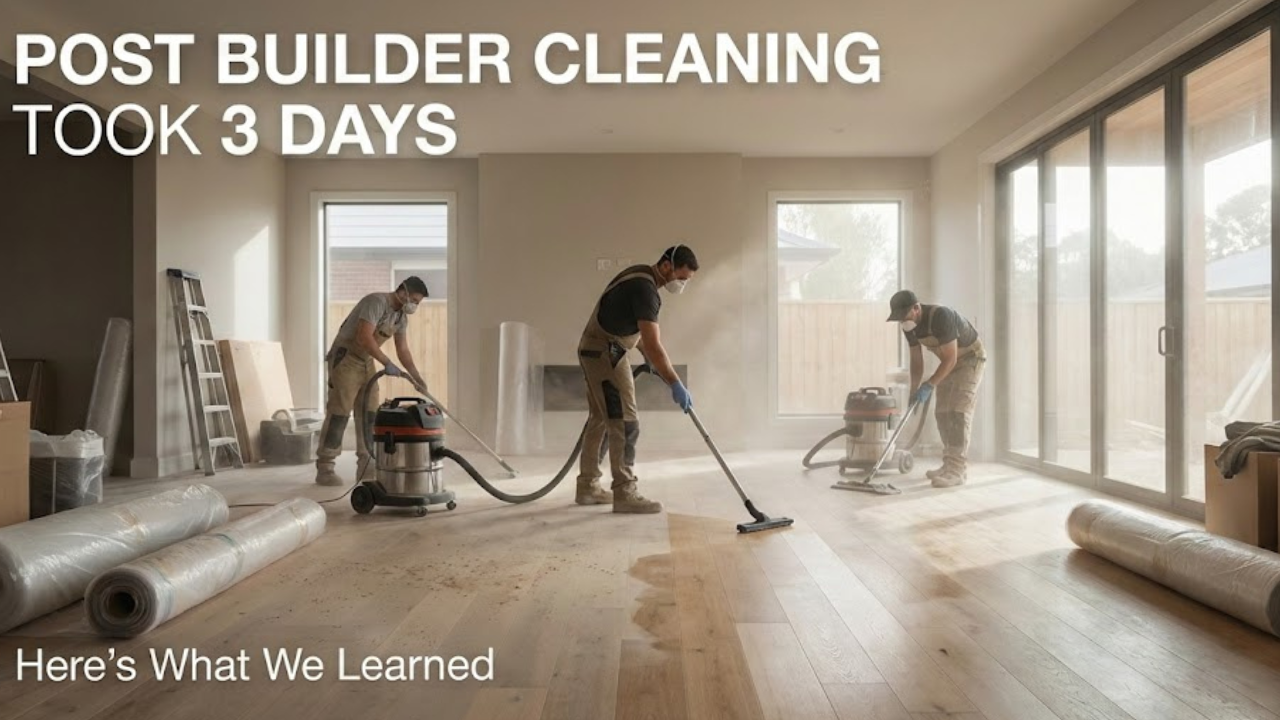
Our post builder cleaning took 3 full days instead of 8 hours. Here’s what went wrong, what we learned, and the mistakes that cost us time and money.
We thought we were smart. The builders finished our kitchen extension on a Friday, and we figured we’d knock out the cleaning ourselves over the weekend. Save a few hundred pounds, maybe treat ourselves to a nice dinner with the money. By Sunday night, we were exhausted, covered in grime, and barely halfway done. The job that professionals quote as 8-16 hours somehow stretched into three full days.
Here’s what nobody tells you about post builder cleaning—and what we wish we’d known before we started.
Day One: The Overconfidence
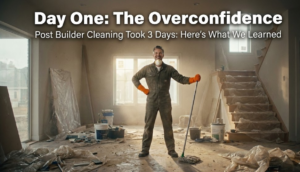
Saturday morning, 8 AM. Armed with our regular vacuum cleaner, some multipurpose spray, and unrealistic optimism, we dove in. The builders had done a “rough clean”—swept the floors, bagged the obvious rubbish—so how bad could it be?
Turns out, very bad.
Within an hour, our vacuum was making a dying wheeze sound. Construction dust isn’t like regular dust. It’s finer, heavier, and it absolutely murders standard household vacuums. We learned this lesson at £180 when ours gave up entirely, motor choked with plaster dust.
Lesson One: You need a HEPA-filter vacuum or a shop vac. Regular vacuums can’t handle construction debris and you’ll destroy them trying.
Day Two: The Hidden Dust Apocalypse
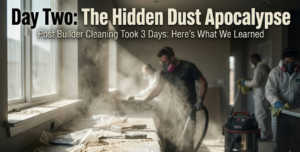
After an emergency Saturday afternoon trip to rent proper equipment, we thought Sunday would be quick. Just vacuum properly, wipe everything down, done by lunch.
Except construction dust is like glitter at a toddler’s birthday party—it gets everywhere and refuses to leave. We found it inside closed kitchen cabinets. Behind picture frames we hadn’t moved. Coating the inside of light fixtures. Somehow, inexplicably, inside the microwave we’d kept wrapped in plastic.
Every surface we wiped revealed three more that needed attention. The “quick wipe” of the windows took two hours because we kept smearing plaster residue around instead of removing it.
Lesson Two: Dust settles for 24-48 hours after construction stops. We should have waited. Professional cleaners often schedule the deep clean two days after builders leave, not immediately.
Day Three: When Reality Hits
By Monday, we’d already used two full days. Both of us took the day off work (there goes that saved money on dinner) to finish. This is when we discovered the really time-consuming bits:
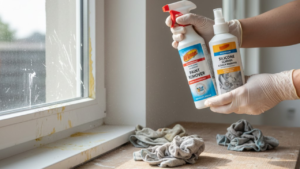
Paint splatters on the new floor tiles that needed careful scraping. Window tracks packed solid with sawdust. Silicone smears on tiles that regular cleaner couldn’t touch. Air vents that looked like they’d survived a sandstorm.
The “light cleaning” phase that professionals budget 4-8 hours for? Took us an entire day, even with two people working.
Lesson Three: Special cleaning products matter. We finally bought proper paint remover and silicone cleaner on Day 3. Should have started with them.
What We’d Do Differently
Three days, one ruined vacuum, two days of lost wages, and approximately forty arguments about whose turn it was to clean the window tracks later, here’s what we learned:
Professional cleaners aren’t overpriced—they’re equipped. Industrial vacuums, specialized chemicals, and the knowledge of what to clean in what order make a massive difference.
The math: Professionals quoted £350. We spent £180 on a new vacuum, £60 on rental equipment, £45 on cleaning products, and lost £480 in wages (two days off at £120 each). Total: £765.
Next time? We’re hiring professionals and actually saving money.
FAQ’S
FAQ 1: Why did the cleaning take three days instead of 8 hours?
The main reason was underestimating how different **post-construction** cleaning is from normal housework. Starting too soon, using the wrong tools, and not having the right products or sequence made every task take much longer than a professional schedule.
FAQ 2: What was the biggest mistake on Day One?
Day One’s biggest mistake was trying to use a standard household vacuum on construction dust. The fine plaster and builder’s dust clogged and killed the motor, costing money and still not actually removing the dust properly.
FAQ 3: Why isn’t a regular vacuum good enough for builder’s dust?
Construction dust is finer, heavier, and more abrasive than normal household dust. It can bypass or clog regular filters, overheat the motor, and often ruin the machine, which is why a HEPA-filter or shop vac is recommended for this kind of job.
FAQ 4: What equipment should you have for post-builder cleaning?
At minimum, you need:
– A HEPA-filter vacuum or shop vac that can handle fine construction dust
– Good quality microfibre cloths and mop heads
– Scrapers and blades for paint splatters
– Protective gear like masks and gloves for dust and chemicals
FAQ 5: Why did the dust keep reappearing even after vacuuming?
Construction dust continues to settle for at least a day or two after work stops, especially the finest particles. Cleaning too early means new dust keeps dropping from higher surfaces and the air, so it feels like the house is “getting dirty again” after each pass.
FAQ 6: When is the right time to do a deep post-build clean?
A better approach is to wait one to two days after builders leave so most dust has settled. Many post-construction cleaners plan the deep clean after this settling period so they are not constantly battling fresh dust.
FAQ 7: What areas turned out to be the worst time sinks?
The most time-consuming spots were:
– Window tracks packed with sawdust
– Paint splatters on new tiles that needed careful scraping
– Silicone smears on tiles and edges
– Air vents and light fittings full of dust and debris
Each of these needed slow, detailed work instead of a quick “once over”.
FAQ 8: Why did ordinary cleaning products not work well?
General multipurpose sprays mainly smeared plaster residue, paint, and silicone around instead of breaking them down. Only once proper paint remover and silicone cleaner were used did the residues come off efficiently, showing how important specialized products are.
FAQ 9: Did DIY actually save them money?
No. The professional quote was £350. By the end, the total came to £180 for a new vacuum, £60 for rental equipment, £45 for cleaning products, and £480 in lost wages from two days off work—£765 in total, more than double the quote.
FAQ 10: What would they do differently next time?
Next time they would:
– Wait 1–2 days after the builders finish before deep cleaning
– Either hire professionals from the start or at least rent a HEPA/shop vac and buy the right chemicals on Day One
– Follow a top‑to‑bottom order (ceilings, walls, fixtures, then floors) to avoid re-contaminating cleaned areas
1 thought on “Post Builder Cleaning Took 3 Days: Here’s What We Learned”