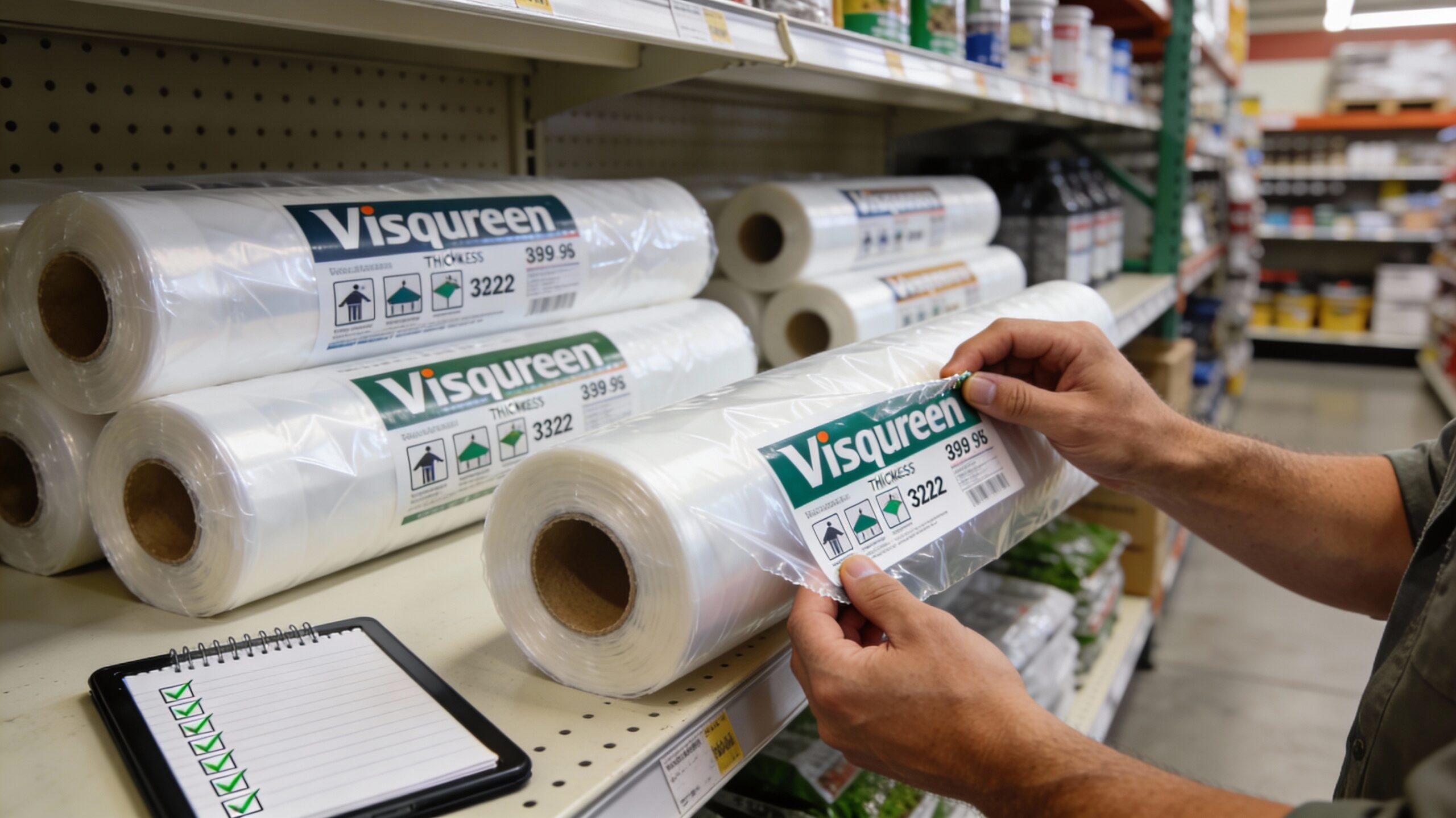
White visqueen plastic sheeting guide for construction, painting, and DIY projects. Learn thickness options, uses, installation tips, and how to choose the best white poly sheeting for your needs.
White visqueen plastic sheeting has become the go-to protective covering for contractors, DIYers, and homeowners tackling everything from painting projects to post-construction cleanup. But with dozens of thickness options, roll sizes, and competing brands available, choosing the right white poly sheeting requires understanding what makes it different from other plastic sheeting options and which applications demand which specifications.
What Is White Visqueen Plastic?
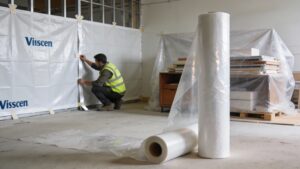
White visqueen plastic is a polyethylene sheeting material characterized by its opaque white color and versatile protective properties. The term “visqueen” has become a generic name for plastic sheeting, similar to how “Kleenex” represents all facial tissues, though Visqueen was originally a brand name introduced by the Visking Corporation around 1950.
Modern white plastic sheeting is manufactured from low-density polyethylene (LDPE), creating a flexible, tear-resistant material that serves as an effective barrier against moisture, dust, and debris. The white coloring comes from added pigments during manufacturing, distinguishing it from clear or black plastic sheeting options.
Unlike clear plastic sheeting that’s translucent, white visqueen provides opacity, making it ideal for situations where you want to block light or conceal what’s underneath. This characteristic makes it particularly popular for creating visual barriers on construction sites and protecting surfaces where complete coverage matters more than visibility.
Key Benefits of White Visqueen Over Clear or Black Alternatives
Superior Light Reflectivity
The most significant advantage of white plastic sheeting is its exceptional light reflectivity. White poly is used to create barriers between rooms at building sites to prevent dust and debris from spreading while providing excellent light reflectivity. This means rooms separated by white sheeting maintain better lighting conditions compared to black plastic that blocks all light or clear plastic that offers minimal light enhancement.
For contractors working in spaces with limited natural light, white visqueen acts as a light amplifier, bouncing available light throughout the workspace. This reduces the need for additional work lights and creates safer, more productive work environments.
Professional Appearance
White plastic sheeting presents a cleaner, more professional appearance than other options. When creating temporary barriers during renovations or protecting client spaces during construction work, white sheeting looks intentional and organized rather than makeshift. This matters particularly for contractors working in occupied homes or commercial spaces where maintaining a professional image impacts client satisfaction.
Temperature Regulation
White surfaces reflect heat rather than absorbing it, unlike black plastic sheeting that can trap and intensify heat. In warm weather conditions or when working near heat-generating equipment, white visqueen stays cooler to the touch and doesn’t create uncomfortable heat pockets in enclosed spaces. This characteristic makes it safer and more comfortable for extended use in various temperature conditions.
Reduced Condensation
The opaque white surface of white plastic sheeting experiences less dramatic temperature fluctuations than clear plastic, which can reduce condensation formation. This matters when using plastic sheeting as a temporary barrier in climate-controlled spaces or as a vapor barrier where moisture control is critical.
Understanding Mil Thickness: Choosing the Right White Visqueen
Plastic sheeting thickness is measured in “mils,” with one mil equaling 0.001 inches or 25.4 micrometers. The mil rating directly impacts durability, tear resistance, and appropriate applications. White visqueen is commonly available in 2 mil, 4 mil, 6 mil, and 10 mil thicknesses.
2 Mil White Plastic Sheeting
The lightest weight option, 2 mil white plastic sheeting works for temporary, light-duty applications where cost is the primary concern. It’s suitable for lightweight paint drop cloths, temporary furniture covering, or single-use protective barriers. However, it tears easily and offers minimal durability for anything beyond short-term use.
Best Uses: Lightweight furniture covering, temporary dust barriers, disposable drop cloths
Not Recommended For: High-traffic areas, long-term projects, vapor barriers
4 Mil White Plastic Sheeting
The 4 mil white polyethylene film can be used as a paint drop cloth for floors or to winterize windows. This mid-weight option provides a better balance between cost and durability, handling moderate use without tearing easily. It’s thick enough for most painting projects and temporary weather protection.
Best Uses: Paint drop cloths, furniture protection, window winterization, temporary weather barriers
Not Recommended For: Heavy construction traffic, permanent vapor barriers, outdoor long-term exposure
6 Mil White Plastic Sheeting
Six mil represents the minimum thickness recommended for vapor barrier applications and moderate-duty construction uses. This thickness provides substantial tear resistance while remaining flexible enough for easy handling and installation. At 6 mil and above, white or black plastic sheeting can be used as a vapor barrier.
Best Uses: Vapor barriers, construction site barriers, crawl space covering, moderate-duty drop cloths
Not Recommended For: Heavy equipment protection, extreme weather exposure without reinforcement
10 Mil White Plastic Sheeting
The 10 mil white plastic sheeting is waterproof and widely used for building site protection and moisture control, serving as vapor barriers for concrete or between drywall and insulation. This heavy-duty option offers maximum durability and puncture resistance, making it suitable for demanding construction applications and long-term installations.
Best Uses: Under-slab vapor barriers, heavy construction barriers, equipment protection, crawl space encapsulation, long-term installations
Not Recommended For: Applications where flexibility and easy folding are priorities, temporary light-duty uses where cost matters more than durability
Common Applications for White Visqueen Plastic
Construction Site Barriers
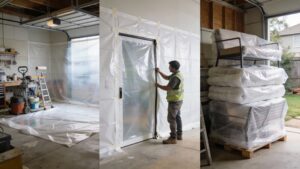
White plastic sheeting excels at creating temporary barriers that separate construction zones from occupied spaces. The light-reflective properties maintain visibility while the durable material contains dust, debris, and construction noise. Contractors frequently use white visqueen to seal off rooms during demolition, drywall installation, or painting, protecting finished spaces from contamination.
Installation typically involves securing the sheeting to door frames or temporary supports using construction tape, staples, or specialized zip poles that hold plastic barriers from floor to ceiling without damaging surfaces.
Vapor and Moisture Barriers
White visqueen serves as an effective vapor barrier in construction applications where moisture control is critical. Common applications include using it as a vapor barrier for concrete or between drywall and insulation, covering crawl spaces, or placing under wood floors.
For vapor barrier applications, proper installation requires minimum 6 mil thickness, overlapping seams by at least 6 inches, and sealing all seams with polyethylene tape specifically designed for plastic sheeting. The white color makes it easier to inspect installation quality and identify any gaps or damage compared to clear sheeting.
Paint and Renovation Protection
White plastic sheeting provides superior paint and renovation protection for floors, furniture, and fixtures. The thickness prevents paint bleed-through better than canvas drop cloths, while the waterproof surface makes cleanup simple—dried paint peels off easily or the entire sheet can be disposed of after the project.
For painting projects, 4 mil thickness typically suffices for walls and ceilings, while 6 mil offers better protection for high-traffic floor areas or when using spray equipment that might create overspray.
Crawl Space and Basement Applications
Crawl space moisture control represents one of the most important applications for white visqueen plastic. The material prevents ground moisture from entering living spaces, reducing humidity, preventing mold growth, and protecting structural elements from moisture damage.
For crawl space applications, 10 mil white plastic sheeting is recommended due to the need for long-term durability and puncture resistance from rocks or debris. Installation requires covering the entire ground surface, running the material several inches up foundation walls, and sealing all seams and penetrations.
Temporary Weather Protection
White plastic sheeting provides temporary weather protection for building materials, equipment, and partially completed construction. The white color reflects sunlight, reducing heat buildup under the covering and preventing temperature-related damage to sensitive materials like wood or adhesives.
However, white plastic sheeting is not UV resistance treated and not recommended as outdoor covers for extended periods. For temporary weather protection lasting days or weeks, white visqueen works well, but longer-term outdoor exposure requires UV-treated alternatives.
Installation Best Practices for White Visqueen
Surface Preparation
Before installing white plastic sheeting, ensure surfaces are clean, dry, and free of sharp objects that could puncture the material. Remove any nails, screws, or debris from the area. For floor applications, sweep thoroughly to prevent objects from working through the plastic during use.
Securing Methods
Multiple securing options exist depending on the application:
Tape: Use heavy-duty plastic sheeting tape at least 2 inches wide for sealing seams and securing edges. Standard masking tape fails quickly with plastic sheeting. For 10 mil plastic, use 9 mil or thicker tape for best results.
Staples: Acceptable for temporary barriers when working with wood framing. Space staples every 6-12 inches for secure attachment.
Weights: For floor protection, weighted edges prevent shifting without surface damage. Sandbags, lumber, or purpose-made weights work effectively.
Zip Poles: Specialized poles create floor-to-ceiling barriers without wall attachment, ideal for finished spaces where damage is unacceptable.
Seam Sealing
When covering large areas requiring multiple sheets, overlap seams by minimum 6 inches. For vapor barrier applications, seal all seams with polyethylene tape, running the tape along the entire seam length and pressing firmly to ensure complete adhesion. Some installations benefit from double-taping, with tape on both sides of the seam for maximum moisture protection.
Penetration Management
Any penetrations through white visqueen—for pipes, wires, or structural elements—must be properly sealed to maintain the barrier’s effectiveness. Cut penetrations as small as possible, then seal around the opening with tape or specialized penetration boots designed for vapor barriers.
Buying Considerations: What to Look For
Virgin vs. Recycled Polyethylene
Construction and Agricultural Grade Polyethylene sheeting contains up to 25% post-consumer recycled content and is made from the least expensive resins available. While this makes it economical, recycled content can reduce strength and longevity.
White plastic sheeting has less or none of recycled polymer material, often using virgin polyethylene that provides superior strength and durability. For critical applications like vapor barriers or long-term installations, virgin polyethylene justifies the higher cost through better performance and longevity.
Roll Size vs. Project Needs
White visqueen comes in various widths (typically 10′, 12′, 14′, 20′, 24′, 32′, and 40′) and lengths (commonly 100′, 200′, or 300′ rolls). Calculate your coverage needs before purchasing to minimize waste and seaming requirements. Wider rolls reduce the number of seams needed for large areas but may be harder to handle and install.
Brand Quality Differences
Major brands like Husky (sold at Home Depot) offer consistent quality and clearly marked specifications. Products that are Build America, Buy America (BABA) Compliant and made in the USA typically provide better quality control than imported alternatives, though at higher prices.
Price vs. Performance
Resist the temptation to choose the cheapest option without considering performance requirements. A 2 mil sheet that tears during installation wastes more money than a 6 mil sheet that lasts through the entire project. For temporary applications, economical options work fine. For critical installations like vapor barriers, invest in proper thickness and quality.
Common Mistakes to Avoid
Using Insufficient Thickness
The most common mistake is selecting plastic too thin for the application. A 2 mil sheet works for light furniture covering but fails miserably as construction site flooring. Always err toward thicker material when uncertain—you can’t add thickness after installation.
Improper Seam Sealing
For vapor barrier applications, unsealed or poorly sealed seams compromise the entire installation. Moisture finds the path of least resistance, meaning a single unsealed seam can undermine an otherwise perfect installation. Use proper polyethylene tape and ensure complete adhesion along all seam edges.
Inadequate Edge Securing
Poorly secured edges allow the plastic to shift, tear, or create trip hazards. Take time to properly secure all edges using appropriate methods for your application. For floor protection, ensure complete edge coverage to prevent the plastic from catching on tools or feet.
Reusing Damaged Plastic
While white visqueen can be reused for multiple projects if handled carefully, attempting to reuse torn or punctured plastic for critical applications like vapor barriers creates false economy. Small holes compromise moisture protection and can expand during installation or use.
Ignoring Warranty and Building Code Requirements
For vapor barrier installations, many jurisdictions require minimum 6 mil thickness and specific installation standards. Using thinner material or improper installation can void warranties and fail building inspections. Verify requirements before starting installation.
Storage and Disposal
Proper Storage
Unused white visqueen should be stored indoors, away from direct sunlight and extreme temperatures. Roll the plastic loosely rather than folding to prevent permanent creases that weaken the material. Store rolls on end or suspended to prevent flattening from storage weight.
Environmental Considerations
Polyethylene plastic sheeting is generally recyclable as plastic #4 (LDPE) where recycling facilities exist. Clean, used plastic sheeting can often be recycled through specialized programs, though sheeting with adhesive tape, paint, or other contaminants may not be accepted. Check local recycling programs for specific requirements.
For disposal, cut large sheets into manageable pieces to prevent them from becoming airborne hazards. Never burn plastic sheeting, as it releases toxic fumes.
Choosing White Visqueen for Your Specific Project
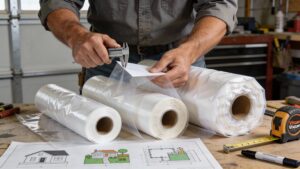
Understanding your project requirements determines the ideal white visqueen specifications. For short-term painting projects in climate-controlled spaces, 4 mil sheeting provides adequate protection at economical prices. For construction barriers separating work zones from occupied spaces, 6 mil offers durability and light reflection benefits that justify the moderate price increase.
Vapor barrier applications demand 6 mil minimum, preferably 10 mil for under-slab or crawl space installations where long-term performance is critical. Heavy construction environments with significant foot traffic or equipment movement require 10 mil thickness to prevent constant tearing and replacement.
The white color specifically benefits projects where light reflectivity matters, professional appearance counts, or you need to create visual barriers while maintaining workspace illumination. When these factors aren’t priorities, clear or black alternatives may serve better depending on specific requirements.
White visqueen plastic represents a versatile, cost-effective solution for countless construction, renovation, and protection applications. Selecting appropriate thickness, proper installation, and understanding when white sheeting offers advantages over alternatives ensures successful project outcomes whether you’re a professional contractor or weekend DIYer tackling home improvements.